
A pot call that sounded lethal in March can go flat and squeaky by the second week of season. Almost nobody's call is broken — it's dirty. Five minutes of conditioning brings back the rasp, the volume, and the high end. Here's exactly how, surface by surface.
Why a Call Goes Dead
A friction call works because the striker tip grabs microscopic texture on the playing surface and skips across it hundreds of times a second. Anything that fills in that texture kills the sound:
- Skin oil. The single biggest culprit. Every time you touch the playing surface with a bare thumb, you leave a slick spot.
- Dust and pollen. Spring woods are filthy. Fine debris packs into the texture and glazes it over.
- Polishing. Normal use gradually burnishes the surface smooth — the call gets quieter and higher-pitched before it goes silent.
- Moisture. Rain and humidity change how the tip grabs, especially on glass and crystal.
The tell: your call still runs loud yelps but won't purr, or it squeaks and skates instead of biting. That's a conditioning problem, not a call problem.
What Belongs in Your Kit
- Conditioning stone — for slate and other soft surfaces.
- Gray or green abrasive pad (the non-scratch kitchen type) — a gentler option for slate and aluminum.
- Drywall sanding screen or 120–220 grit sandpaper — for glass, crystal, and other hard surfaces.
- A scrap of 220 grit — for the striker tip, not the surface.
- A clean dry rag — wipe the dust off after conditioning, always.
- A pot call case or sock — surface-to-surface contact in a vest is how calls get ruined.
Condition by Surface
Slate
The softest common surface and the easiest to over-work. Use a conditioning stone or an abrasive pad with light pressure. Work in one direction only — straight strokes across the face, never circles. You want a uniform dull, chalky look with no shiny patches. Wipe the dust off and test. Slate needs conditioning most often and asks for the lightest touch.
Crystal and Glass
These are hard, and a stone won't touch them. Use drywall screen or 120–220 grit sandpaper, again in straight one-direction strokes. Condition until the whole surface looks evenly frosted — any glossy area is a spot where your striker will skate. Crystal is the most weather-sensitive surface out there, so expect to re-scuff it mid-hunt on a damp morning.
Aluminum, Steel, and Titanium
Metal surfaces want a green abrasive pad or fine grit. Straight strokes, moderate pressure, until the shine is knocked off. Metal holds its condition far longer than slate, which is exactly why it's the pick for wet weather and all-day hunts.
Carbon
Condition lightly with fine grit and stop early. Carbon runs raspy with very little help, and it's the surface most often ruined by hunters conditioning it like slate.
The One-Direction Rule
Condition in one direction, then run your striker across that direction, not along it. The tiny parallel grooves you just cut are what the tip catches on. Condition north-to-south, call east-to-west, and you get maximum bite from minimum abrasion. Circular conditioning creates a swirl pattern that grabs inconsistently, which is where random squeaks come from.
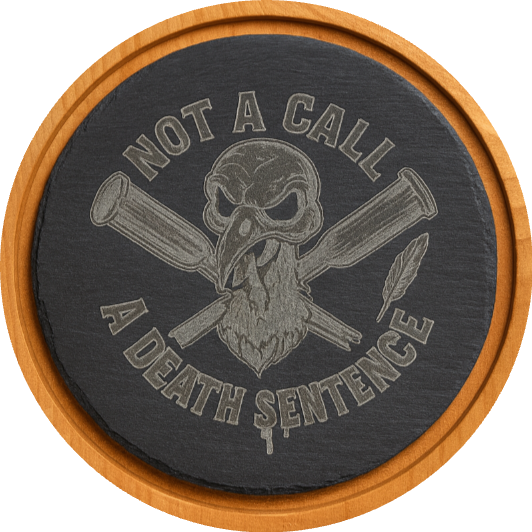
The Beard Reaper
Precision-ported cherry hardwood, 10-hole exhaust, and a laser-etched playing surface built to hold its bite. $49.99 + free shipping.
Buy CallThe Striker Is Half the Call
Hunters obsess over surfaces and ignore the stick doing the work. Change nothing but the striker and you have a different-sounding call.
- Tip shape sets the tone. A rounder, blunter tip runs deeper and softer. A finer, more pointed tip runs higher and cuts harder. Sand the tip with 220 grit to reshape it — a few strokes changes the voice noticeably.
- Scuff the tip, not just the surface. Tips glaze exactly like playing surfaces do. If a freshly conditioned call still won't bite, it's the tip.
- Wood species matters. Dense woods like purpleheart and hickory push volume and high end. Softer woods like poplar and cedar run mellower and easier at low volume.
- Carry two. One shaped for soft close work, one for long-range cutting. It's the cheapest way to double what your call can do.
- Never grab the tip. The oil from your fingers does the same thing to a tip that it does to the surface.
Diagnosing by Symptom
- High-pitched squeak, no rasp: Surface is glazed or oiled. Condition it, and scuff the tip.
- Won't run soft — jumps straight to loud: Too much surface polish. Condition, then practice lighter pressure with a blunter striker.
- Sounds fine loud, thin and weak quiet: Tip is too pointed or too polished. Round it slightly and re-scuff.
- Striker chatters and skips: Over-conditioned with circular strokes. Re-condition in straight one-direction passes.
- Went dead in the rain: Dry the surface completely, re-scuff, and switch to a metal surface if you have the option.
- Dull and lifeless everywhere: You're probably touching the playing surface. Hold the call by the pot from now on.
Storage and Field Habits
- Hold the call by the edge of the pot. Never let your palm or thumb ride the playing surface.
- Store it in a case or sock so nothing rides against the face in your vest.
- Keep it out of a hot truck — heat and hardwood are a bad combination for a hand-built pot.
- Toss a folded piece of drywall screen in your vest pocket. A ten-second scuff at the base of a tree has saved a lot of hunts.
- Never store a call damp. Let it dry fully at room temperature before it goes back in the case.
Your Season Checklist
Two Weeks Before Opening Day
- Condition every surface you plan to carry, from scratch.
- Reshape and scuff every striker tip.
- Run each call at three volumes and pick your primary.
- Replace anything cracked, warped, or loose.
During the Season
- Light scuff before every hunt — thirty seconds, not thirty strokes.
- Re-scuff mid-hunt any time humidity climbs or the call goes thin.
- Wipe dust after every conditioning pass.
- Dry everything out at the end of the day.
The Bottom Line
Conditioning is the highest-return five minutes in turkey hunting. Keep the surface evenly dull, keep the tip scuffed, work in one direction, and stop touching the face of your call. Do that and a good pot call will sound as deadly in week six as it did on opening morning.